Tarnish-Free vs Tarnish-Resistant: The Truth About Stainless Steel Claims
Updated: Oct 6
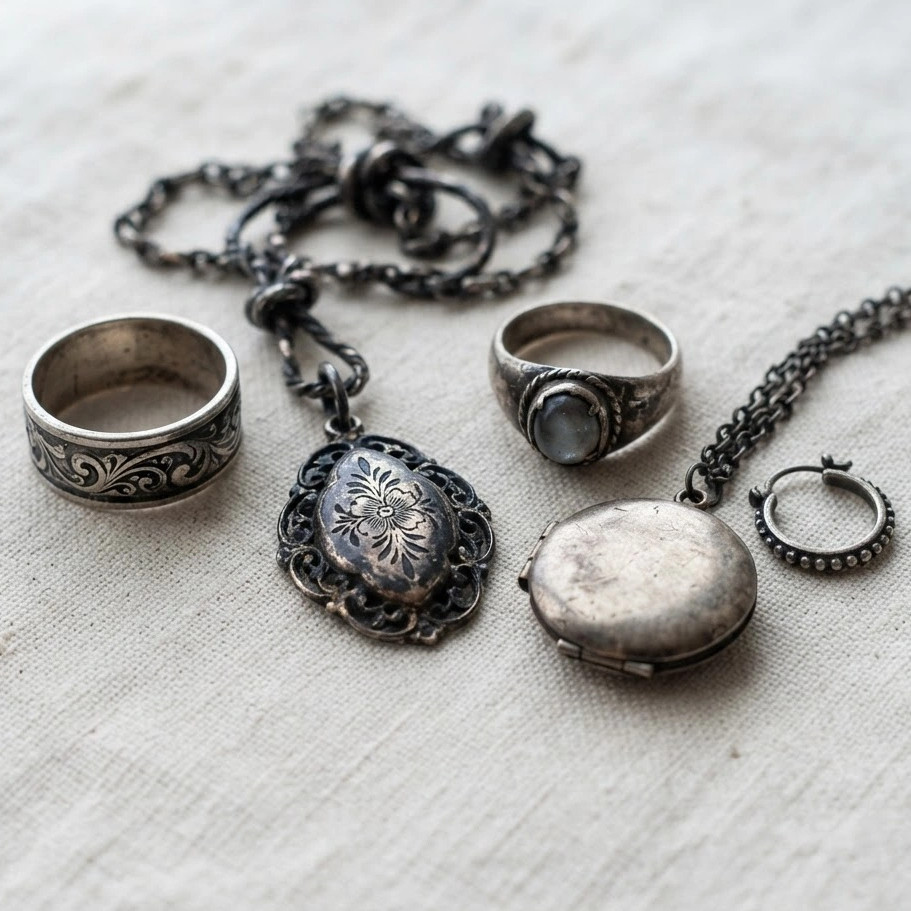
The short answer: "Tarnish-free" promises it will never happen, and "tarnish-resistant" admits it can, just slowly. With good-quality stainless steel like 304 or 316L, the steel itself doesn't tarnish the way silver or brass does, but lower grades can, and the gold finish on top can wear. That wear is what most people mistake for tarnish.
What do tarnish-free and tarnish-resistant actually mean?
Tarnish is a chemical reaction on the surface of a metal, like sterling silver darkening or brass dulling. "Tarnish-free" is the bigger promise, because it says that reaction will never happen. "Tarnish-resistant" is the more honest one, because it says the reaction is slow to start and depends on how you look after the piece.
Which one is true depends on the metal, and with stainless steel the answer comes in two parts: the steel, and the finish on top of it.
Does stainless steel jewellery tarnish?
Good-quality stainless steel, no. Stainless steel contains at least about 10.5% chromium, which forms an invisible, self-repairing layer of chromium oxide on the surface. That layer blocks the reactions with oxygen and sulphur that cause tarnish, and it re-forms if the surface gets scratched. So for 304 and 316L, "tarnish-free" is close to true. Lower grades are a different story, which I'll cover below.
Material | Does it tarnish? |
Sterling silver | Yes. It reacts with sulphur and moisture in the air and darkens. Polishing brings it back |
Plated brass or copper | Yes, once the plating wears. The base metal reacts and can mark skin |
Stainless steel, 304 or 316L | No. The chromium layer protects it |
Stainless steel, 201 | It can. Lower corrosion resistance means it's more prone to rust spots and discolouration, especially when damp |
PVD-plated stainless steel | A good-quality steel base doesn't, but the finish can wear in high-friction spots |
Solid gold and platinum | Rarely. Gold itself doesn't react, though lower carats can dull from the other metals in them |
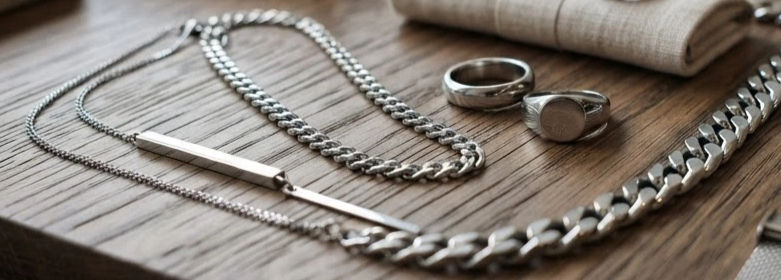
Not all stainless steel is the same
Stainless steel is a family of grades, and they don't all hold up equally.
Grade | What to know | Tarnish and corrosion |
201 | Cheaper, with little nickel and more manganese | Lowest resistance. More prone to rust spots and discolouration, especially when damp, sweaty or salty |
304 | The everyday standard for jewellery | Good for daily wear, slightly less resistant than 316L to salt and chlorine |
316L | Contains molybdenum, often called marine grade | Best resistance, including salt and chlorine |
201 is the one I'd watch for. It does get used in jewellery because it costs less, and the trade-off is lower corrosion resistance, so it needs more care. A good coating protects whatever is underneath, but once the finish wears, the grade underneath matters. A label that just says "stainless steel" could mean any of the three, which is why I always name the grade. So why do these claims still matter?

Because a finished piece of jewellery is more than bare steel, and there are three ways a "tarnish-free" claim falls apart.
The finish isn't the steel. Gold-tone, rose and black pieces get their colour from a coating, either plating or PVD. The steel underneath is fine, but the coating can wear away in high-friction places like clasps and edges. When it does, you see silver-toned steel showing through. That's wear, not tarnish, and calling it tarnish isn't fair to the steel or to you.
Chemicals can damage the protective layer. Bleach and chlorine-based cleaners attack the chromium oxide layer, and scouring pads and abrasive powders can scratch through it faster than it rebuilds.
Not everything labelled stainless steel is. Some cheap pieces use low-grade steel with too little chromium, or a base metal with a stainless-look plating. That's why I always try to label which grade a piece is, like 304 or 316L, instead of just "stainless steel" where I have the information.
What an honest claim looks like
The grade is named. "304 stainless steel" tells you something. "Alloy" or "metal" doesn't.
The finish is named. "18K PVD plating over stainless steel" tells you what's on top and what's underneath.
The wording admits limits. "Tarnish-resistant" with care instructions is more believable than "never tarnishes".
The care advice is specific. A brand that tells you what to avoid has usually thought about how its pieces wear.
Red flags are "tarnish-free" or "lifetime guarantee" with no materials listed, a very low price promising real gold, and no care instructions.
How to keep stainless steel looking its best
Wipe with a soft cloth and mild soapy water, then dry. That usually restores the shine.
Keep it away from bleach and chlorine-based cleaners.
Skip abrasive pads, powders and silver polish, which can scratch or strip the finish.
Store pieces dry, and separately if you can, so they don't scratch each other.
I've cover how water, salt and chlorine affect different metals in my Waterproof vs Water-resistant Post, and my Care Guide has more on looking after stainless steel jewellery.
Where Glossy Fox fits in
Most of my pieces are 304 stainless steel with 18K PVD plating. The steel won't tarnish, but the finish can wear over time, especially where pieces rub against skin and clothes, which is why I say tarnish-resistant and not tarnish-free. I'd rather promise something I can back up.
My Jin Collection pendants are the exception. Some of them are 18K PVD-plated copper, while the chains and hoops are 304 stainless steel. While the plating is intact, they're tarnish-resistant. Once it wears, the copper underneath can tarnish and may mark your skin, so I'd keep those pendants away from water, sweat and perfume, and store them somewhere dry. Last Updated 04/10/2026